Aug 19, 2026News & Insights
Are Cheap USB-C Chargers and Cables Safe? What B2B Buyers Should Check Before Bulk Orders
Learn what importers and distributors should check before buying cheap USB-C chargers and cables, including safety, wattage, materials, QC, and certifications.
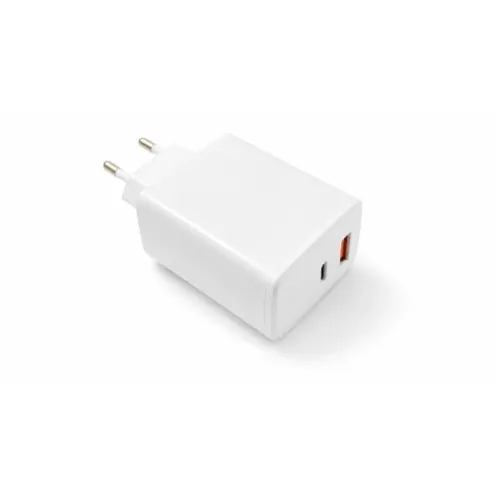
A practical guide for importers and distributors to check USB-C charger and cable safety, including wattage, materials, QC, packaging, and certification documents.
For importers, wholesalers, distributors, and private label brands, low price is always attractive. But when sourcing USB-C chargers and cables in bulk, price should never be the only factor. A charger or cable may look simple from the outside, but poor materials, unstable output, weak protection design, or incorrect cable specifications can create quality and safety risks.
In recent years, more devices have moved to USB-C charging. This makes product selection more convenient, but it also means buyers must understand the difference between a low-cost product and a well-controlled product. A cheap USB-C charger is not always unsafe, but an unverified charger with poor components, weak insulation, or no proper quality control can create problems for both buyers and end users.
Why Cheap USB-C Products Can Create Risk
Many low-cost chargers and cables reduce cost through thinner wire, lower-grade components, weak housing material, or simplified internal design. For B2B buyers, this can lead to unstable charging, overheating complaints, poor durability, higher return rates, and damage to brand reputation.
For USB-C cables, the problem is not only appearance. Cable current rating, wire structure, connector quality, and whether the cable supports the correct charging power all matter. A cable used with a fast charger should match the charger and device requirements.
Why Wattage Labels Are Not Enough
Many products show “20W,” “45W,” “65W,” or “100W” on the package. However, wattage alone does not prove real performance. Buyers should also check output profiles, PD or PPS support, cable current rating, plug type, material, and testing process.
For example, a 100W USB-C cable should not be treated the same as a basic charging cable. Higher-power USB-C cables need the right internal structure and proper marking. E-marker Chip also requires for USB-C to USB-C cables to be marked with 100W or 240W power capability through the proper logo or icon.
What B2B Buyers Should Check Before Ordering Chargers
Before placing bulk charger orders, buyers should confirm:
- Input and output specifications
- PD, PPS, or QC protocol support
- Plug type for the target market
- Fire-resistant housing material
- PCBA testing process
- Aging testing process
- Function testing before shipment
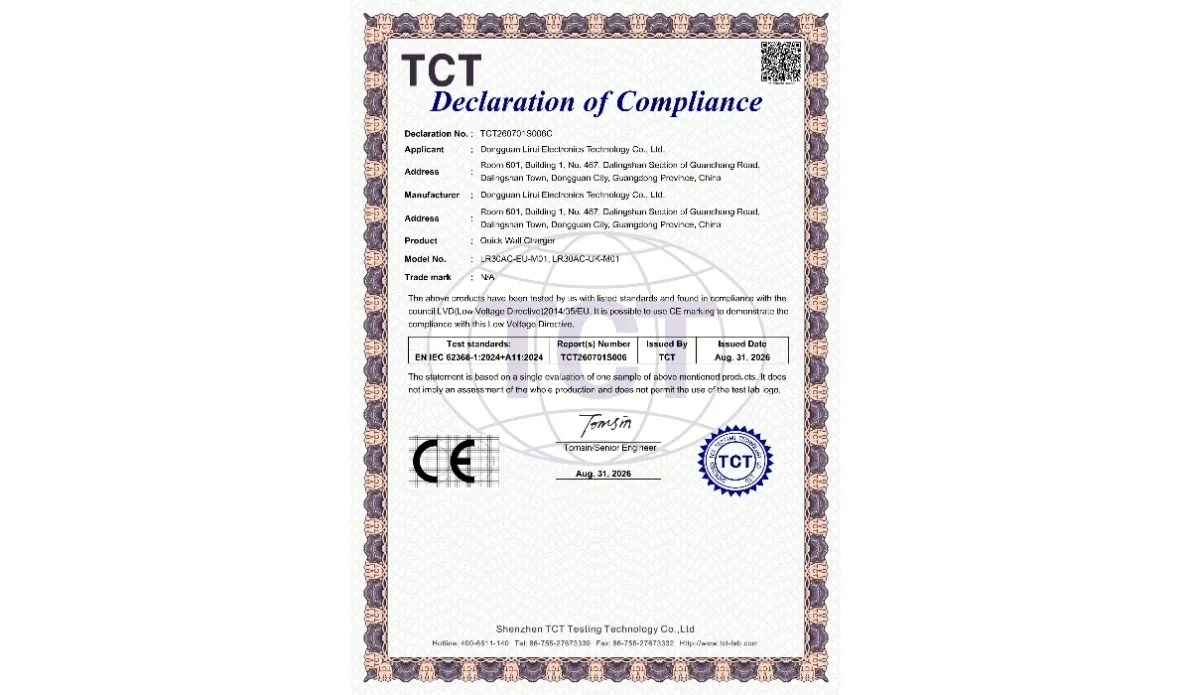
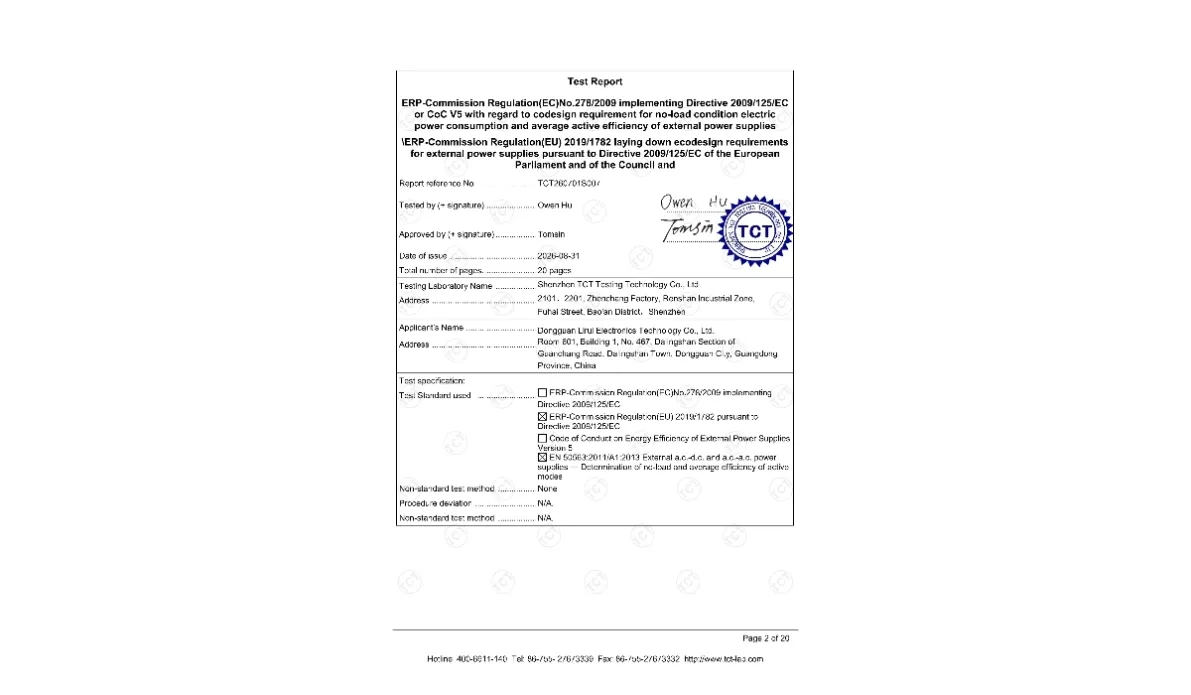
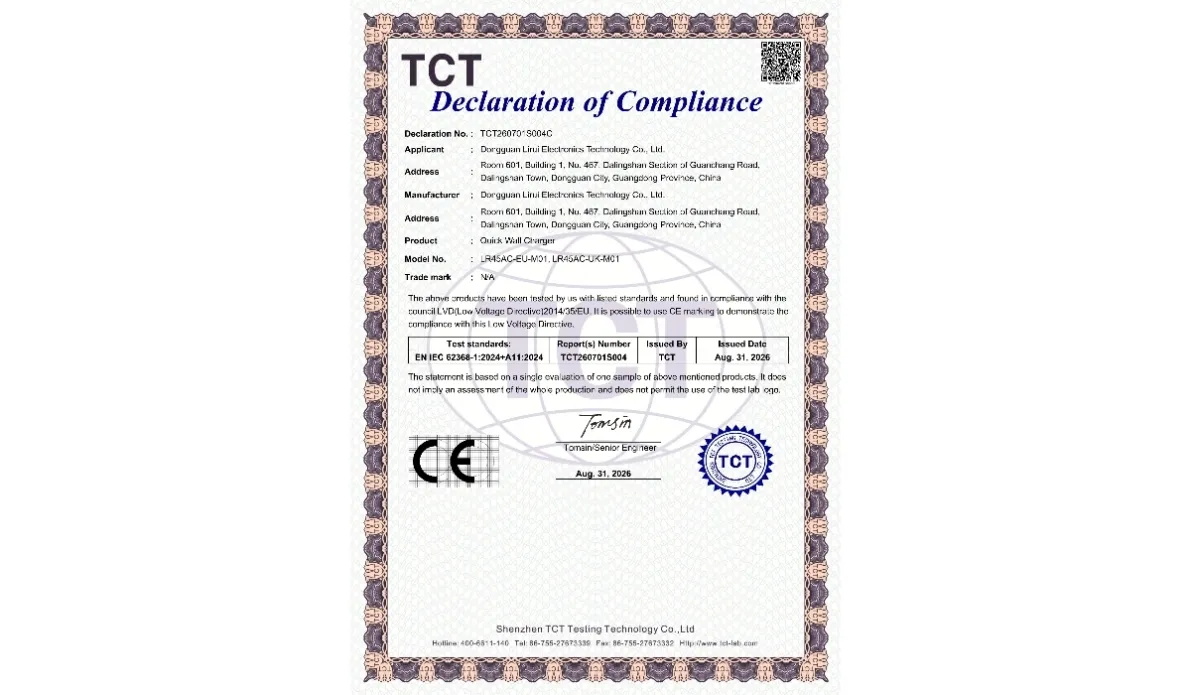
- Available CE, RoHS, or ErP documents
- Packaging and barcode requirements
These details help reduce sourcing risk and make the product easier to sell in retail, wholesale, and private label channels.
What B2B Buyers Should Check Before Ordering USB Cables
For USB cables, buyers should confirm connector type, cable length, charging power, data function, wire material, outer material, and packaging method. Common options include USB-C to USB-C, USB-C to Lightning, USB-A to USB-C, and multi-functional cable designs.
If the cable is used for fast charging, buyers should confirm whether it supports 60W, 100W, or higher charging power. For private label brands, the packaging should clearly describe the correct charging power and compatible usage scenario.
Why QC Matters Before Shipment
Good quality control does not only happen at the end of production. It starts from material inspection and continues through PCBA testing, aging testing, function testing, appearance checks, and packaging inspection.
For charger products, PCBA testing helps check circuit stability before final assembly. Aging testing helps verify output stability and temperature control under working conditions. These steps are important for reducing complaints after bulk shipment.
Conclusion
Cheap USB-C chargers and cables may look attractive, but B2B buyers should check more than price. The right supplier should provide clear specifications, practical QC, stable production, packaging support, and available certification documents for selected models.
Dongguan Lirui Electronics Technology Co., Ltd. supplies USB-C chargers, car chargers, USB cables, and wired earphones for global importers, wholesalers, distributors, e-commerce sellers, and private label brands.