How to Choose Your First SKUs for a Mobile Accessories Brand
Launching a mobile accessories brand? Learn how to choose your first SKUs, compare landed costs and test demand before a large OEM order.
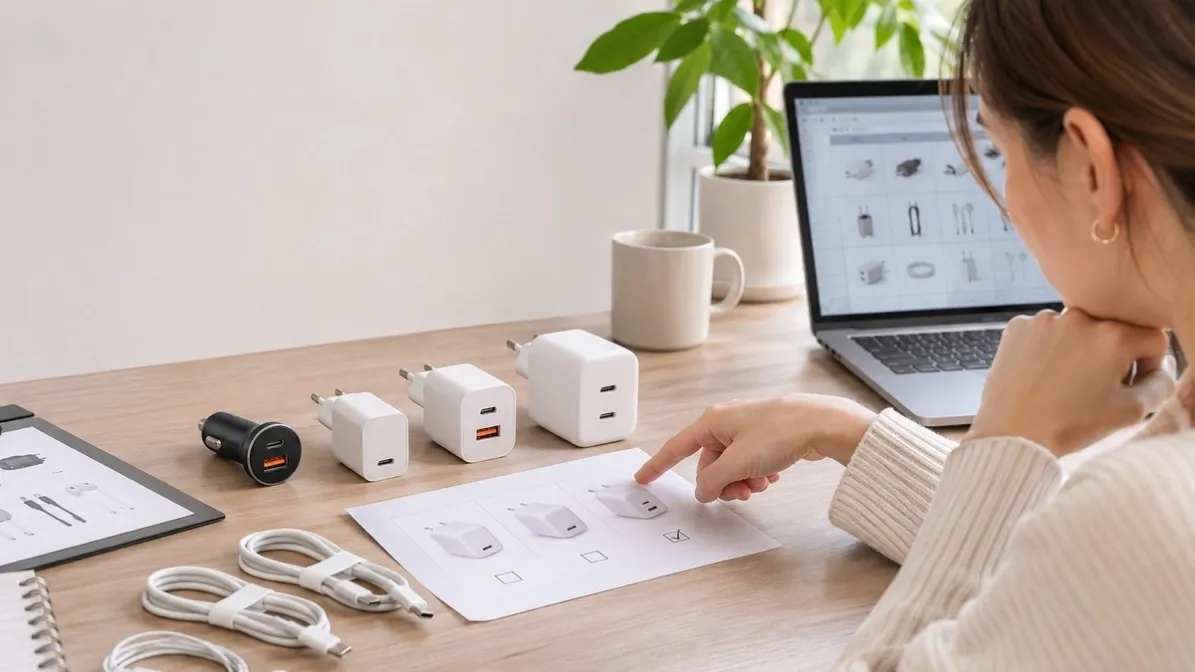
A practical starter assortment for private-label chargers, cables and wired earphones—without tying up cash in unnecessary variants.
Launching your own mobile accessories brand? The biggest mistake may be offering too many products before knowing which ones customers will actually buy.
A new retailer needs a focused range, not a full catalogue. Here is a practical way to choose your first SKUs without spreading your inventory budget too thin.
1. Start with One Customer and One Sales Channel
Are you selling to independent phone shops, online shoppers or corporate-gift buyers? Their requirements differ.
A phone shop may value easy-to-explain chargers and replacement cables. An online brand may need clear product differentiation, strong images and packaging that prevents compatibility questions.
Write down the target country, selling channel, price position and typical device before selecting products.
2. Build a Small Core Range
For a new brand, four to six initial SKUs can be a manageable planning example, not a universal sales formula. Consider this illustrative mix:
| Product role | Example SKU | Buyer question |
|---|---|---|
| Everyday charging | 20W USB-C + USB-A wall charger | Is the required plug and output suitable? |
| Upgrade option | 45W USB-C + USB-A charger | Which devices and protocols are supported? |
| Add-on sale | USB-C to USB-C 60W cable | What length and data function are declared? |
| Travel/in-car use | Dual-port USB car charger | Does the input suit the target vehicle market? |
| Audio option | Wired earphones | Which connector and microphone functions are tested? |
This is a starting hypothesis. Use retailer feedback and sample costs to remove or replace items before ordering.
3. Count Variants as Separate SKUs
An EU-plug charger and a UK-plug charger are different inventory items. So are black and white retail packs, or 1m and 2m cables when sold separately.
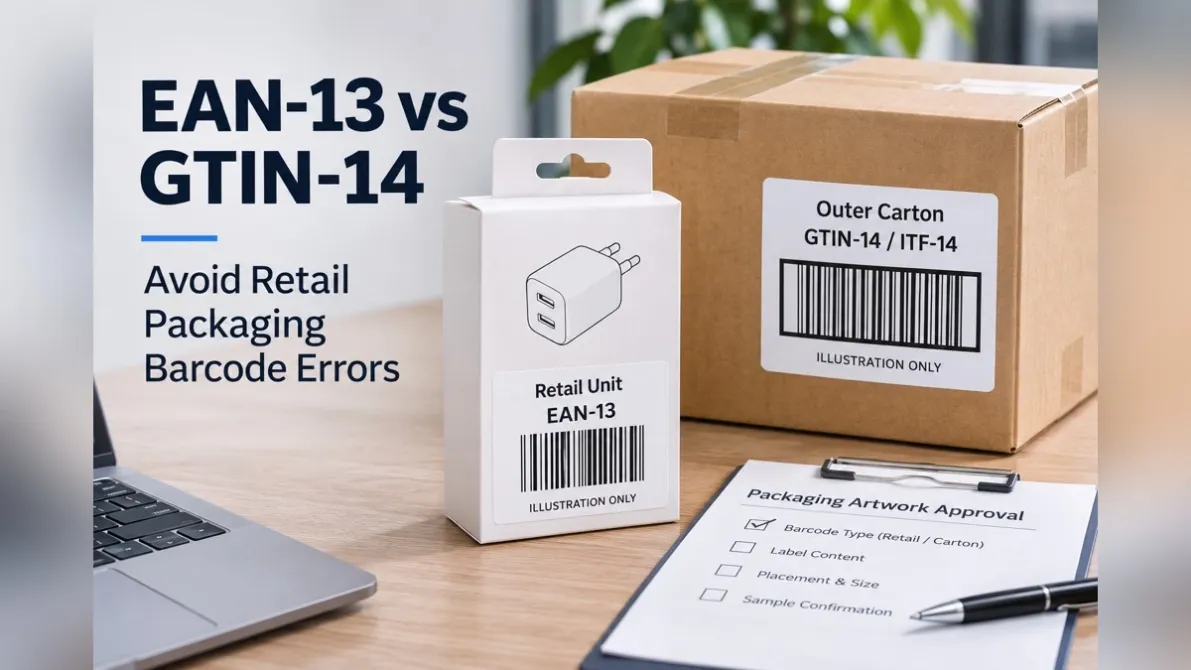
GS1's product identification guidance also distinguishes product variants for retail tracking. Do not assume one barcode or stock record can cover every variation.
4. Calculate Profit Before Choosing the Winner
Compare landed cost, not factory price alone. Include the purchase price, packaging, transport, import charges and a realistic allowance for returns or defects.
Then check your expected selling price and margin. A low-price item may still be expensive to support if packaging, shipping or after-sales costs are high.
Ask your supplier about minimum order quantities, sample approval, lead times and product-specific documentation before confirming a launch range.
5. Expand Only After You Have Evidence
Review actual sell-through, gross margin, returns and repeat orders for each SKU. Reorder proven products first. Add another connector, power rating or colour only when the demand justifies it.
Lirui supplies wall chargers, car chargers, USB-C cables and wired earphones for OEM projects. We can discuss samples and packaging for a focused launch assortment; all model specifications and documentation should be confirmed individually.
Related products: 20W Dual-Port Charger · 45W Dual-Port Charger · USB-C Braided Cable
For samples and OEM orders, kindly contact us.
References & Sources
- GS1 US — Barcode and Product Identification FAQs (variations and GTIN allocation). https://www.gs1us.org/faqs/gs1-company-prefix-barcodes-and-indentification
- Lirui Electronics — 20W Dual-Port USB-C Charger (product listing). https://liruitech.com/products/oem-20w-dual-port-usbc-fast-charger
- Lirui Electronics — 45W USB-C + USB-A Charger (product listing). https://www.liruitech.com/products/private-label-45w-usb-c-usb-a-gan-charger-with-pps
- Lirui Electronics — USB-C Braided Cable (product listing). https://www.liruitech.com/products/wholesale-usb-c-to-usb-c-braided-fast-charging-cable
Editor's note: The suggested SKU mix and assortment size are buyer recommendations, not proven sales rankings or published market statistics.