Aug 19, 2026News & Insights
Quality Control Steps for Chargers Before Bulk Shipment
Learn the key charger quality control steps before bulk shipment, including material inspection, PCBA testing, aging testing, function test, and packaging check.
Quality Control Steps for Chargers Before Bulk Shipment
For charger importers, wholesalers, distributors, and private label brands, quality control is one of the most important parts of the sourcing process. A charger may look simple from the outside, but internal circuit stability, output performance, heat control, and packaging quality all affect the final user experience.
Before bulk shipment, a professional charger supplier should follow a clear quality control process. This helps reduce defective products, customer complaints, retail returns, and sourcing risks.
- Material Inspection
Quality control starts before assembly. Incoming materials should be checked before production, including housing materials, PCBAs, electronic components, plugs, shells, and packaging materials.
Material inspection helps ensure that the parts used in mass production match the confirmed sample and order requirements. For B2B buyers, this step is important because material changes can affect product stability, appearance, and performance.
- PCBA Testing
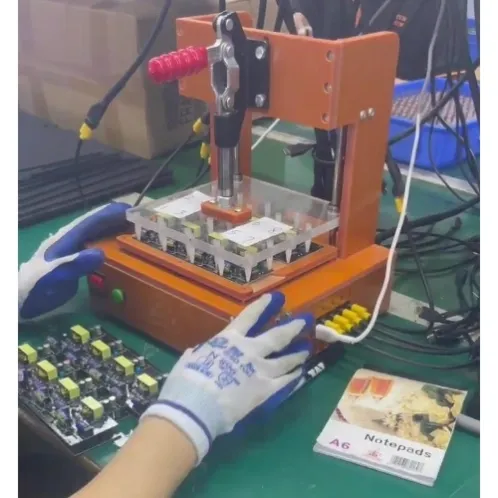
PCBA testing is very important for charger production. The PCBA is the core part of a charger, and it directly affects output performance, circuit stability, and charging safety.
Before final assembly, charger PCBAs should be tested to check soldering quality, electrical performance, and basic circuit function. This step helps identify problems before the product is fully assembled, which can reduce defective products during bulk production.
- Aging Testing
Aging testing is another important process for charger quality control. During aging testing, chargers are operated under working conditions for a set period. This helps check temperature rise, output stability, and long-term reliability.
For importers and distributors, aging testing is valuable because many charger problems may not appear during a short function test. A controlled aging test helps improve confidence before shipment.
- Function Testing
After assembly, chargers should go through function testing. This includes checking charging output, port function, compatibility, and basic performance. For multi-port chargers, each port should be checked to confirm that the product works as expected.
Function testing is especially important for USB-C PD chargers, GaN chargers, and dual port chargers, because different ports and protocols may have different output performance.
- Appearance Inspection
Appearance inspection helps ensure that the product is suitable for retail and wholesale markets. The charger surface, plug, ports, logo, color, and housing should be checked before packaging.
For private label brands, appearance consistency is important because the product represents the buyer’s own brand in the market.
- Packaging Inspection
The final step is packaging inspection. The supplier should check packaging appearance, labels, barcodes, product quantity, carton marks, and packing method.
Good packaging inspection helps ensure that goods are ready for retail display, warehouse receiving, customs clearance, and final delivery.
Conclusion
A complete charger quality control process should include material inspection, PCBA testing, aging testing, function testing, appearance inspection, and packaging inspection. These steps help B2B buyers reduce sourcing risk and improve product consistency before shipment.
Dongguan Lirui Electronics Technology Co., Ltd. supports global importers, wholesalers, distributors, and private label brands with practical QC and OEM/ODM manufacturing for chargers, car chargers, USB cables, and wired earphones.