Aug 19, 2026News & Insights
What B2B Buyers Should Check Before Ordering USB Cables
A USB cable sourcing guide for importers and distributors, covering charging power, materials, length, packaging, QC, and OEM orders.
What B2B Buyers Should Check Before Ordering USB Cables
USB cables are one of the most common mobile accessory products for importers, wholesalers, distributors, and private label brands. Although the product looks simple, many quality issues can appear if buyers only focus on price.
Before placing bulk USB cable orders, B2B buyers should confirm the cable type, charging power, data transfer function, material, length, packaging, and quality control requirements. These details directly affect customer satisfaction, retail returns, and long-term sales performance.
- Confirm the Cable Type
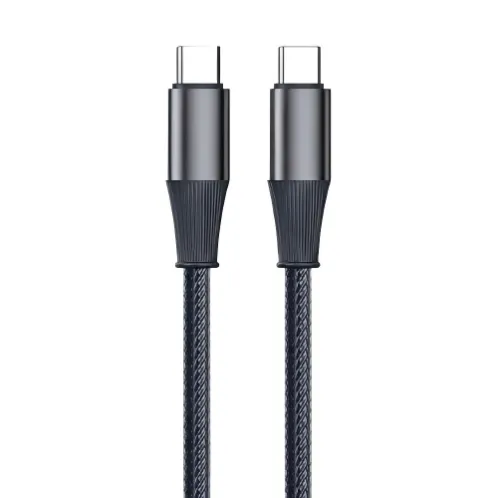
The first step is to confirm the connector type. Common options include USB-C to USB-C, USB-C to Lightning, USB-A to USB-C, USB-A to Lightning, and multi-functional cables.
Different markets and sales channels may need different cable types. For example, USB-C to USB-C cables are suitable for newer smartphones, tablets, and fast chargers. USB-A to USB-C cables are still useful for many entry-level chargers, power banks, and car chargers.
- Check Charging Power
Charging power is a key selling point for USB cables. Common options include 10W, 27W, 60W, 100W, and higher power levels depending on the cable design.
For USB-C to USB-C cables, buyers should confirm whether the cable supports 60W, 100W, or 240W charging. For 100W and higher-power cables, an E-marker chip may be required depending on the specification. Buyers should also confirm the copper wire structure and cable length, because longer cables may affect charging performance.
- Confirm Data Transfer Function
Not all charging cables support the same data transfer speed. Some cables are mainly designed for charging, while others support charging and data transfer.
For retail packaging, it is better to clearly describe whether the cable supports data sync and what transfer speed is available. This helps avoid customer misunderstanding after purchase.
- Review Cable Material
Cable material affects appearance, durability, flexibility, and product positioning. Common materials include PVC, TPE, braided nylon, silicone, and flat cable designs.
For wholesale and private label buyers, material selection should match the target market. Entry-level markets may prefer competitive pricing, while premium retail channels may prefer braided or silicone cables with stronger visual appeal.
- Confirm Length,OD and Packaging
Cable length is another important point. Popular lengths include 0.16m,1m, 1.5m, and 2m. Short cables are suitable for power banks, travel kits, and key holder designs. Longer cables are suitable for home, office, and retail accessory sales.
And don't forget cable OD ,we usually have OD2.9,3.0,3.0,3.5,4.2,4.5 cable diameter
Packaging should also be confirmed before bulk orders. Buyers may need PE bags, color boxes, hanging boxes, blister packaging, barcode labels, or private label packaging.
- Check Quality Control Before Shipment
Before shipment, USB cables should be checked for charging function, connector fit, appearance, length, packaging, and basic durability. For B2B buyers, clear inspection standards help reduce after-sales issues and improve repeat orders.
Conclusion
Ordering USB cables in bulk requires careful confirmation of connector type, charging power, data function, material, length, packaging, and QC requirements. A professional supplier can help buyers select the right cable for their sales channel and target market.
Dongguan Lirui Electronics Technology Co., Ltd. supplies USB-C cables, USB-C chargers, car chargers, and wired earphones for importers, wholesalers, distributors, and private label brands.